

If you suddenly experience severe, burning, or tingling pain from your waist to your hips and legs, it can make it difficult to walk, sit, or even sleep. These sciatica symptoms can also interfere with work, exercise, and daily movement. Physiotherapy for sciatica can help manage these symptoms and improve movement, but the right approach depends on the underlying cause.
In this article, you will learn about everything from the symptoms and assessment of sciatica to the role of physiotherapy, treatment approaches, exercises and rehabilitation, and when further medical assessment may be necessary.
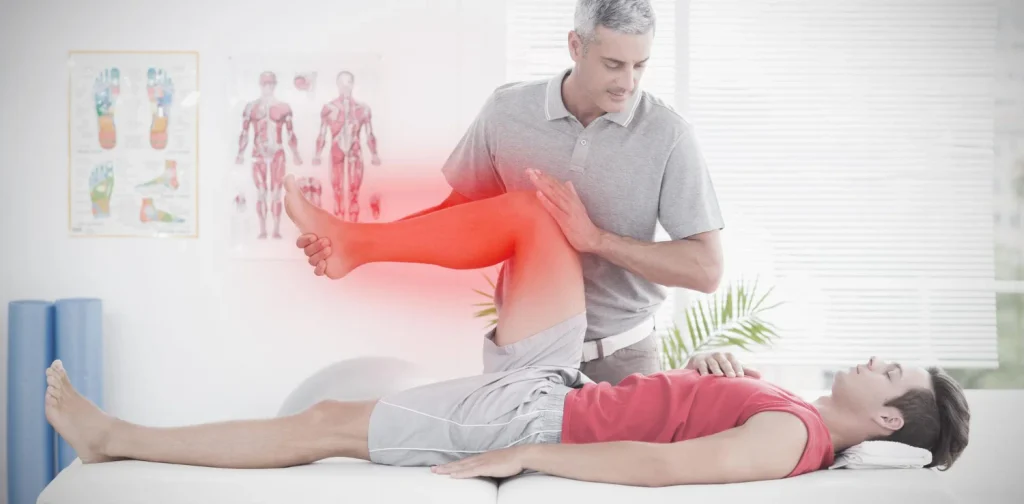
What Is Sciatica?
Sciatica can make pain travel from your lower back or buttock into one leg. This usually happens when irritation affects the nerves that supply the leg. Pressure around the lower spine can also trigger these symptoms.
What Causes Sciatica?
Sciatica often develops when nerves in the lower back become irritated or squeezed. Several common spinal conditions can contribute.
- Herniated or slipped disc: The inner part of the disc can bulge out and create pressure on the nearby nerve root.
- Spinal stenosis: The space inside the spine can narrow, creating pressure on the nerve roots.
- Spondylolisthesis: If one vertebra moves forward relative to another, it can cause irritation or compression of the nerve root.
- Nerve root irritation or compression: Symptoms of sciatica can occur when the nerve root is irritated or compressed due to various changes in the spine.
- Other spinal changes: Age-related or other structural changes may cause nerve irritation in some cases.
What Does Sciatica Feel Like?
Sciatica usually causes sharp, shooting or burning pain that can radiate from the lower back or buttock down the leg. Symptoms usually occur on one side of the body and may worsen with certain movements or activities.
Common symptoms may include:
- Severe or shooting pain: The pain may spread from the buttock down to the leg.
- Tingling: There may be a tingling or pins-and-needles feeling in the feet or legs.
- Numbness: There may be a loss of sensation in any part of the leg or foot.
- Muscle weakness: The affected leg may feel weaker than the other.
- Symptoms increase: Symptoms may worsen during prolonged sitting, coughing, sneezing, or certain movements.

How Is Sciatica Assessed?
When assessing sciatica, the physiotherapist will first ask about your symptoms, medical history, and daily activities. Then, they may assess how your symptoms affect your movement, lower back movement, and muscle strength.
If needed, the physiotherapist may also assess nerve-related symptoms and leg movement. Depending on your symptoms and assessment findings, we may recommend further medical assessment. In some cases, additional investigation may be necessary.
How Does Physiotherapy Help With Sciatica?
Physiotherapy can help manage sciatica by reducing pain, restoring movement, improving strength and supporting a gradual return to activity. Treatment may vary depending on your symptoms, movement and individual needs.
Physiotherapy usually:
- May help reduce pain and irritability
- May work to restore spinal and hip movement
- Can improve nerve mobility if needed
- May help increase muscle strength
- Can improve movement patterns
- Can support gradual return to work, sport or daily activities
- Teaching self-management can help reduce the risk of recurring symptoms.

What Treatments Can Physiotherapy Use for Sciatica?
Physiotherapy can use multiple treatment approaches for sciatica. Your therapist can choose the appropriate combination based on your symptoms, assessment, and functional goals.
Manual Therapy
Manual therapy involves hands-on techniques the therapist uses. It can be part of a wider rehabilitation plan to manage symptoms such as pain and movement.
Soft Tissue Therapy
Soft tissue techniques can help address tension or stiffness in the surrounding muscles. If movement is restricted, this approach may be part of the treatment, depending on the assessment.
Nerve Mobilisation
Nerve mobilisation involves gentle movements to support the nerve’s normal movement. Your physiotherapist will decide whether this is appropriate based on your symptoms and assessment.
Therapeutic Exercise
Exercise can be an important part of sciatica management. Your physiotherapist can select suitable exercises based on your symptoms, movement response and functional goals. These can help restore movement, strength, and confidence in daily activities.
Strength and Core Rehabilitation
Rehabilitation may involve strengthening the lower back, abdomen/core, hips, and leg muscles. The goal may be to increase functional strength and improve your ability to do daily activities.
Movement and Functional Retraining
In some cases, physiotherapy may focus on lifting, bending, walking, running, and work- and sport-specific movements. This helps you return to necessary activities gradually, with appropriate movement strategies.
What Exercises May Help With Sciatica?
We select sciatica exercises based on your symptoms, movement, and recovery goals. Not all exercises work the same for everyone, so gradual progression matters.
Mobility Exercises
Gentle lower back, hip, or leg movements can help reduce stiffness and restore comfortable movement.
Nerve Gliding Exercises
Nerve gliding exercises can support normal mobility of irritated nerves through gentle movements. Select these based on symptoms.
Strengthening Exercises
Core, hip, and lower limb strengthening exercises can help improve movement control and physical function.
Functional Exercises
Walking, bending, lifting, or sport-specific movements can gradually become part of an exercise programme. These can help you gradually return to daily activities or sport.
Safety note: Choose exercises based on your symptoms and clinical assessment. If any exercise significantly increases symptoms, consult a physiotherapist.
How Long Does Physiotherapy Take to Help Sciatica?
How long sciatica symptoms take to improve can vary by person and condition. The underlying cause, how long symptoms have been present, pain severity, and nerve involvement can all affect recovery time. Your response to treatment and how consistently you follow your rehabilitation program are also important. Some people’s symptoms may improve quickly, while others may take longer to recover. Therefore, it is not appropriate to guarantee recovery within a specific timeframe before starting physiotherapy. After the assessment, the physiotherapist can decide on a treatment plan and next steps according to your condition and progress.
When Should You Seek Urgent Medical Help?
Seek urgent medical evaluation if you develop new bladder or bowel control problems, numbness in the groin or saddle area, rapidly worsening severe weakness, or significant symptoms in both legs. These may signal a more serious problem and may require prompt medical assessment.
Physiotherapy for Sciatica in Shirley
You can get a physiotherapy assessment for sciatica in Shirley. The assessment will help you develop a personalised treatment approach based on your symptoms, movement and individual needs. Mesut Acar, Lead Physiotherapist, and Dr Özden Yasarer, Physiotherapist, provide physiotherapy care tailored to each patient’s needs.
A combination of assessment, exercise, and appropriate treatment can help manage sciatica symptoms. If you have needs related to sports or physical activity, you can also find out about our Sports Physiotherapy service.
FAQ
Can physiotherapy help sciatica?
Yes, physiotherapy can help manage sciatica symptoms.
How does physiotherapy help sciatica?
Physiotherapy can help reduce pain, improve movement, and restore strength and function.
Do I need an MRI for sciatica?
Not always; further investigation may be necessary depending on symptoms and clinical assessment.
What exercises are good for sciatica?
Mobility, nerve gliding, and strengthening exercises may be appropriate depending on your symptoms and assessment.
Can sciatica come back after physiotherapy?
Yes, sciatica can recur. Regular exercise, activity management, and self-management can help reduce the risk of recurrence.
When should I see a physiotherapist for sciatica?
If symptoms affect daily activities or don’t improve, consider a physiotherapy assessment.
