

A sharp or burning sensation may radiate from the lower back or buttocks down the leg, making even simple activities, such as walking, sitting, or getting out of bed, suddenly uncomfortable. Sciatica pain often radiates down the leg and can make movement difficult. In some cases, gentle movement and appropriate sciatica exercises can help manage symptoms. However, the same exercise is not suitable for everyone. Choose exercises based on your symptoms, movement restrictions, and individual tolerance. In this guide, you will learn about the types of exercises and stretches you can consider, how to approach them safely, and when to stop exercising and seek professional advice.
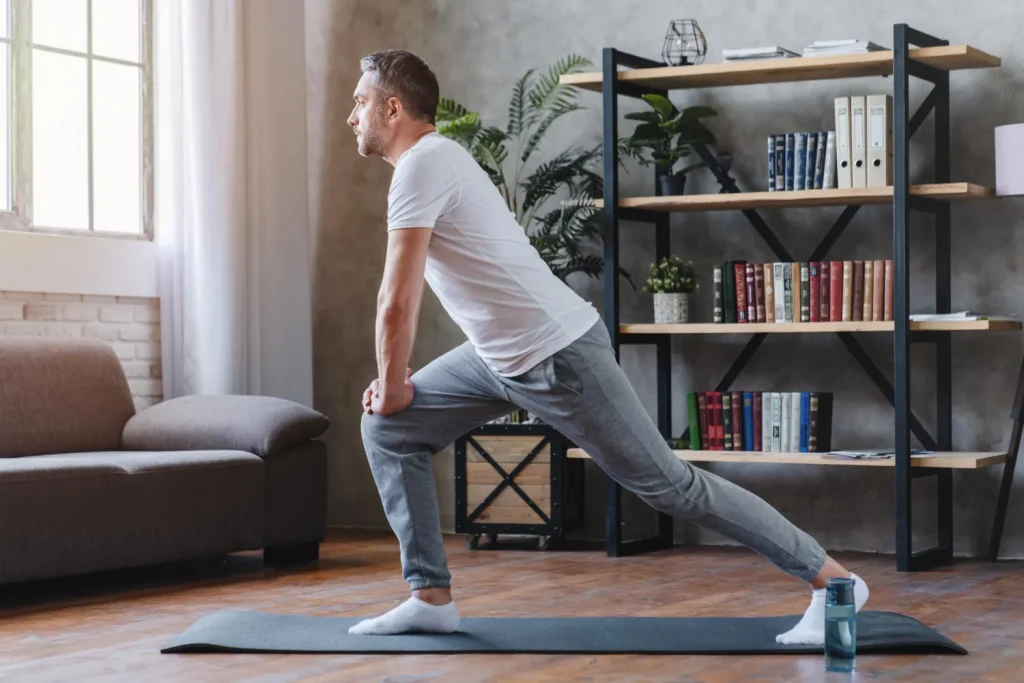
How Can Exercises Help Sciatica Pain?
Gentle exercises can help manage your sciatica pain. Appropriate movement can help maintain your mobility, improve hip and lower-back flexibility, and reduce muscle tension. These can make walking, sitting, bending, or other daily movements more comfortable. However, what works for you might not work for someone else. While one movement might ease your symptoms, another could aggravate your pain or leg symptoms. So, consider your symptoms, movement limitations, and individual tolerance when choosing exercises. Not all exercises suit everyone.

7 Exercises for Sciatica Pain Relief
The exercises below focus on gentle movement, hip mobility, lower-back movement, and soft tissue flexibility. However, not every exercise suits everyone. Stop any movement that increases pain or sciatica symptoms.
1. Seated Glute Stretch
- Sit on the floor or on a stable chair and place your legs in front of you.
- Bend one knee and place the ankle of that leg onto the opposite knee.
- Lean forward slowly until you feel a comfortable stretch in your buttocks.
- Hold for approximately 15 to 30 seconds, then slowly return to the starting position.
2. Sitting Spinal Stretch
- Sit on the floor, keep one leg straight, and cross the other leg over it.
- Slowly turn your body towards the bent knee.
- Keep the movement within a comfortable range and do not force the stretch.
- Slowly return to the starting position and repeat on the other side.
3. Basic Seated Stretch
- Sit upright in a chair with your feet on the floor.
- Place the symptomatic leg over the other knee.
- Lean forward slowly, keeping your back as comfortable and straight as possible.
- If you feel a comfortable stretch, hold the position for a while and then slowly return to the starting position.
4. Figure-4 Stretch
- Lie on your back, bend both knees, and place your feet on the floor.
- Place one ankle over the opposite knee.
- Slowly move towards the supporting leg until you feel a comfortable stretch in the buttock or hip area.
- Hold for a while and slowly return to the starting position.
5. Knee-to-Opposite-Shoulder Stretch
- Lie on your back and bend one knee.
- Hold the knee with both hands.
- Slowly bring the knee towards the opposite shoulder.
- Once you feel a comfortable stretch, hold the position for about 20 to 30 seconds, then slowly lower your leg.
6. Standing Hamstring Stretch
- Stand and place one foot on a chair or another stable surface that is below hip level.
- Keep the toes of that foot pointing towards you.
- Keep your back comfortable and slowly lean forward.
- If you feel a gentle stretch in the hamstring, hold the position for a while and then slowly return to the starting position.
7. Standing Piriformis Stretch
- Stand near a wall and use it for support if you need it to maintain your balance.
- Place one ankle over the opposite knee.
- Slowly bend the supporting-leg knee and draw the movement toward the hip.
- When you feel a comfortable stretch, hold the position for a while and slowly return to the starting position.
Important: Stop exercising if pain increases or new symptoms develop during the activity. If you experience numbness, weakness, or other concerning symptoms, consult a healthcare professional before starting an exercise program on your own.
Exercises to Avoid or Modify With Sciatica
Staying active can support recovery, but more exercise does not always mean greater benefits. Activities involving heavy lifting or forceful twisting can place excessive stress on your lower back. Aggressive stretching can also aggravate your symptoms, especially if movement causes radiating pain to increase down the leg. Avoid or modify any movements that trigger sharp, radiating, or worsening pain. Pay attention to how your symptoms respond while exercising, and keep your movements within a comfortable range.
How Often Should You Do Sciatica Exercises?
How often you should perform sciatica exercises depends on your symptoms and fitness level. Start with gentle exercises and short sessions. If your symptoms remain stable after exercising, you can gradually increase the frequency or duration. If any exercise aggravates your pain or radiating symptoms, you may need to reduce the frequency or modify the movement. If your symptoms persist, a physiotherapist can guide you on the appropriate exercise frequency and progression based on your condition.
When Should You Stop an Exercise?
If the pain becomes sharper or spreads further down your leg while exercising, stop the exercise and do not force yourself to continue. Stop exercising if you develop new or worsening numbness or weakness, or if you feel unwell. If a specific movement clearly aggravates your symptoms, you may need to modify it or choose a different exercise.
When Should You See a Physiotherapist?
If your sciatica symptoms persist, don’t improve with exercise, or you are unsure which exercises are suitable for you, consider an assessment by a physiotherapist. If the pain interferes with daily activities or flares up repeatedly, professional guidance could be particularly useful.
FAQ
What is the best exercise for sciatica?
The best exercise depends on your symptoms, movement tolerance, and how you respond to exercise.
Can exercise make sciatica worse?
Yes, unsuitable or overly intense movements can aggravate your symptoms.
Should I stretch when I have sciatica?
Gentle stretching may help in some cases, but stop exercising if pain or symptoms worsen.
How often should I do sciatica exercises?
Frequency depends on your symptoms, tolerance, and recovery; start gently and gradually increase activity as appropriate.
When should I see a physiotherapist about sciatica exercises?
Consider consulting a physiotherapist if symptoms persist, worsen, or interfere with daily activities, or if you are unsure which exercises are suitable.
